11. GENERAL PROCESS INSTRUCTIONS

Cleaning of coating baskets with zinc-containing paint residues
(Curing before the blasting process)

Purpose and objective of the procedure

These procedural instructions describe the safe and compliant procedure for cleaning coating baskets with zinc-containing paint deposits.

The objective is to minimize the risk of fire and explosion in the subsequent blasting process by baking the paint and to ensure efficient, reproducible cleaning.

This description refers exclusively to German legal principles and regulations. It is essential to check the respective regulations in the country where the procedure is to be used!

Scope of application

  • Steel coating baskets;
  • Adhering paint with zinc-containing binders/pigments;
  • Pre-treatment prior to dry blasting processes (e.g., steel shot).

11.1 Legal basis and regulations (applies in Germany)

The dust generated during the blasting of centrifugal baskets poses both an explosion hazard and a health hazard. The safety parameters for the explosion hazard are described in VDI 2263 Sheet 1. For particle sizes below 500μm, a dust explosion hazard must always be assumed. A median value below 63 μm indicates a high proportion of fine dust, which is highly flammable in blasting systems (especially with zinc flakes). Regulations such as TRGS 900 (occupational exposure limits) stipulate strict limits for dust concentration in the workplace (e.g., 1.25 mg/m³ for A dust). Without active dust removal, these values are immediately exceeded in the case of fine dust (<63 μm).

The recommendation to have the dust tested is a legal obligation within the framework of a risk assessment (GefStoffV).

The main risks of fire and explosion are posed by dust deposits in pipes and dust extraction systems (filter systems). Dust filter systems (with cartridge or bag filters) must be designed to be pressure shock resistant and must be located outdoors. If located inside a building, complex explosion protection measures are required (valves are complex and expensive).

Alternatively, wet scrubbers can also be used. These are cheaper, but also have disadvantages. They have a higher cut point compared to dry filters, so police filters are still necessary to capture the finest dust particles. In addition, sludge is produced, which must be disposed of. Manufacturers generally prohibit the return of filtered air into the building, as the regulations for this are very strict.

These procedural instructions take the following into account in particular:

  • IFA / GESTIS – Combustible dusts in blasting systems
    → Information on smoldering nests (hot spots), dust explosion classes, and paint-related ignition risks
  • VdS 3445 – Fire protection in dust extraction systems
    → Fire prevention measures, handling of metallic dusts with organic components
  • VDI 2263 Sheets 1 & 6 (indirectly referenced)
  • DIN EN 1127-1 – Avoidance of effective ignition sources
  • ATEX Directive 2014/34/EU
  • Other applicable regulations for plant manufacturers (e.g., EN 15089 – Flame arresters, EN 14491 – Pressure relief, EN 14373 – Explosion suppression)
Hazards without curing

  • Zinc-containing paints contain organic or inorganic binders which, when blasted,:
    • produce combustible fine dust
    • tend to form smoldering nests (BZ 4)
  • According to IFA evaluation, 70–80% of blasting dusts are explosive, especially on painted surfaces
  • Increased risks:
    • Filter fires
    • Dust explosions (St 1)
    • Ignition by hot particles or sparks
    • Curing before the blasting process is essential to eliminate organic components.

The process description covers thermal curing, the cooling phase, and the subsequent blasting process after curing.

  • Visually inspect coating baskets (no liquids, no foreign matter)
  • Remove heavy paint runs mechanically (if necessary)
  • Place the baskets in the curing oven when dry

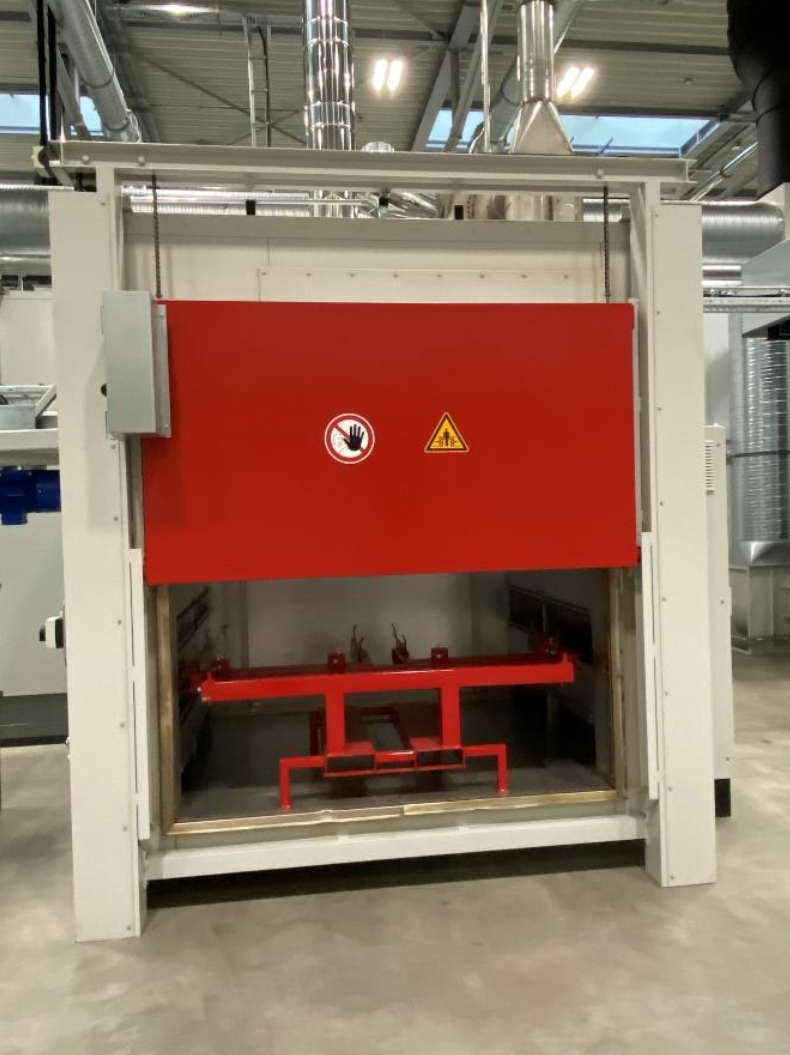
Curing oven for thermal curing of coating baskets
Figure X: Curing oven for thermal curing of coating baskets.

Objective:

Decomposition and degassing of the organic paint components, reduction of the calorific value of the subsequent blasting dust.

Parameters (guideline values):

  • Temperature: 250–350 °C
  • Coatings containing PTFE may produce toxic decomposition products. BfR warning of toxic fumes at temperatures above 360°C (fluorophosgene, hydrofluoric acid). Closed systems and exhaust gas purification are recommended in this case.
  • Holding time: 1–2 hours (depending on paint layer thickness)
  • Atmosphere: Air, well ventilated
  • Controlled heating and cooling phase (no temperature shocks)

4 Issue date: January 30, 2026

Important information:

  • Temperature < ignition temperature of metallic residues
  • Controlled exhaust gas discharge
  • Do not introduce other components with oil or plastic residues at the same time

  • Cool down to < 50 °C
  • No water or air shock cooling
  • Only process baskets after they have cooled down completely

If possible, a separate blasting system that is NOT used for the pretreatment of components should be used for blasting centrifuge baskets. Reason: To avoid cross-contamination of blasted components with dust-like residues (organic matter, PTFE, zinc flakes).

Use non-combustible blasting media (e.g., steel, glass, corundum)

  • Selection of blasting media according to cleaning efficiency: e.g., steel S110
  • Very sharp-edged, coarse blasting media lead to higher wear on the basket surface
  • Sensitive or load-bearing parts can be covered to prevent wear
  • Ensure:
    • low-spark blasting technology
    • Functioning extraction system
    • Regular filter cleaning
  • Blasting dust is now predominantly inorganic, significantly lower fire load

Risk of smoldering nests and filter fires greatly reduced

The protective measures include technical and organizational measures as well as the required personal protective equipment for the safe execution of the procedure.

  • Grounding of all system components
  • Temperature monitoring at the curing oven
  • Extraction with fire protection design
  • Regular filter checks in accordance with VdS 3445

  • Prohibition of fire-hazardous work in the vicinity
  • Regular cleaning of dust deposits
  • Documentation of curing parameters
  • Instruction of personnel

  • Heat-resistant gloves
  • Safety goggles
  • Respiratory protection in case of dust release
  • Safety shoes

  • Visual inspection after baking (no coating residues, matt ash/oxide layer)
  • Random checks of the blasting dust composition (if necessary)
  • Documentation in the cleaning and maintenance log

  • Incompletely cured paint → cure again
  • Noticeable smoke development → stop process immediately
  • Fire incidents → take measures in accordance with fire safety regulations

Comments (0)

No comments yet.

Do you have constructive feedback?

Please log in to leave a comment.